
Traditional financial services usually rely on banks, brokers and other financial institutions to connect people with services such as lending, borrowing and trading.
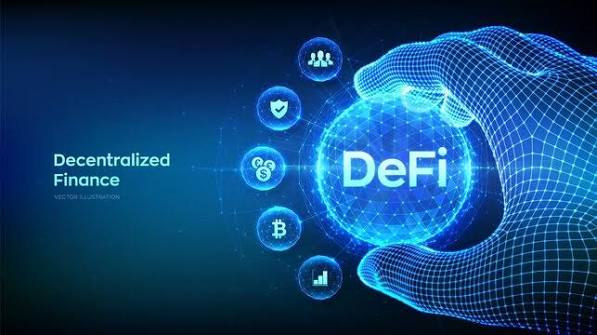
DeFi, short for decentralized finance, takes a different approach.
DeFi uses blockchain-based applications and smart contracts to provide financial services without relying on a traditional central intermediary for every transaction.
This approach has created a growing part of the cryptocurrency ecosystem. However, understanding how DeFi works is important before considering its potential benefits and risks.
What Is DeFi?
DeFi stands for decentralized finance.
It refers to financial applications built on blockchain technology that allow users to access services through decentralized protocols and smart contracts.
Instead of relying on a bank or traditional financial institution to process every transaction, users can interact directly with blockchain-based protocols.
The level of decentralization can vary between projects. Some protocols may still have developers, governance systems or other forms of control.
How Smart Contracts Work in DeFi
Smart contracts are a fundamental part of DeFi.
A smart contract is a program stored on a blockchain that automatically executes predefined instructions when specified conditions are met.
For example, a lending protocol can use smart contracts to manage deposits, loans, collateral and repayments according to the rules programmed into the system.
Because these rules are written into software, many DeFi processes can operate without the manual involvement of a traditional financial intermediary.
Lending and Borrowing in DeFi
Lending and borrowing are among the most common uses of DeFi.
Users can deposit certain crypto assets into lending protocols, where those assets may become available to borrowers. Depending on the protocol, borrowers generally need to provide collateral.
Interest rates can be influenced by supply and demand within the system.
However, DeFi lending involves significant risks. Cryptocurrency prices can be highly volatile, and the value of collateral can fall rapidly. Smart-contract vulnerabilities and protocol failures can create additional risks.
Decentralized Exchanges
Decentralized exchanges, commonly known as DEXs, allow users to trade crypto assets through blockchain-based protocols.
Traditional centralized exchanges generally require users to deposit assets with the exchange. With a DEX, users can interact directly with smart contracts to execute trades.
Many decentralized exchanges use automated market makers and liquidity pools instead of traditional order books.
Liquidity providers deposit assets into these pools and may receive a portion of trading fees, depending on the protocol.
What Is a Liquidity Pool?
A liquidity pool is a collection of crypto assets held in a smart contract to help facilitate transactions.
For example, a decentralized exchange may have a pool containing two different assets. Traders can exchange one asset for another using the liquidity available in the pool.
Liquidity providers may earn a share of trading fees, but providing liquidity also involves risks.
One important risk is impermanent loss. This can occur when the relative prices of assets in a liquidity pool change significantly, potentially affecting the value of the provider’s holdings compared with simply holding the assets separately.
DeFi Is Not Without Risk
Removing a traditional intermediary does not eliminate financial or technical risks.
Potential risks include:
- Smart-contract vulnerabilities
- Cryptocurrency price volatility
- Liquidity risk
- Protocol failure
- Oracle-related problems
- Governance risks
- Scams and fraudulent projects
A popular protocol is not automatically a risk-free protocol. Even established projects can carry technical, financial and operational risks.
Why DeFi Attracts Attention
DeFi provides access to financial applications that operate on blockchain networks and can generally be accessed around the clock.
It also allows users to interact directly with financial protocols through compatible crypto wallets.
For developers, programmable financial infrastructure creates opportunities to build applications involving lending, trading, payments and other financial services.
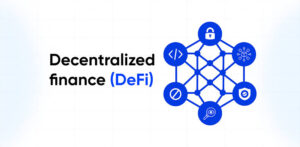
This ability for different applications and protocols to interact with one another is known as composability and is one of the features that distinguishes DeFi from many traditional financial systems.
Why Research Matters
Before interacting with a DeFi protocol, it is important to understand how the system works.
Research can include looking at:
- The protocol’s smart contracts
- Supported assets
- Fees
- Liquidity
- Governance structure
- Security history
- Potential risks
Security audits can provide useful information, but an audit does not guarantee that a protocol is completely secure.
It is also important to distinguish between potential returns and the risks involved before committing funds.
The Bigger Picture
DeFi represents a different approach to financial services, using blockchain networks and smart contracts to create systems for activities such as trading, lending and borrowing.
The technology offers interesting possibilities, but financial and technical risks do not disappear simply because a system is decentralized.
As the DeFi ecosystem continues to develop, understanding how protocols work, where the risks come from and how assets are managed can be more valuable than simply chasing the highest advertised returns.