
Digital money
Digital money always seemed something away from everyday life. Cryptocurrency is a common topic of discussion today in finance, technology and online business. Bitcoin, Ethereum, and thousands of other digital currencies have spawned a completely new sector of the financial world, and blockchain technology has opened the door to applications beyond cryptocurrency.
“Cryptocurrency and blockchain are not the same thing, but they’re related, and the interesting thing is… Cryptocurrency is one of the most visible applications of blockchain technology. Blockchain itself is a broader technology that can be used to record information, verify transactions and build digital systems without relying entirely on a central authority.
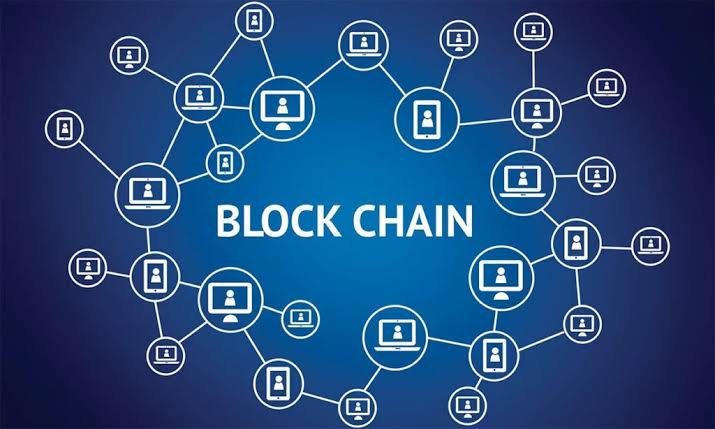
A blockchain is a distributed digital ledger
A blockchain is a distributed digital ledger. All the data is stored in blocks, where the block is connected to the previous one. Once it is added to the network, and verified, it is very hard to change an old record. Instead of having one record, in one place, the blockchain can be copied and distributed over many computers.
One reason that blockchain technology has received a lot of attention is this structure. A traditional database is usually run by a given organization. Participants may have control of blockchain networks (depending on the design of a particular network). This can allow transparency and less need for one party to control everything about a transaction.
Bitcoin
Bitcoin showed that it could be used for digital payments. It is the most famous form of digital currency in the world and allows for transactions to be added to a decentralized network. The technology’s popularity also forced developers to explore other applications of the blockchain.
Ethereum
Then Ethereum took it even further with its smart contract technology. Smart agreements are computer code that runs on a blockchain and is activated when certain conditions are met. This enabled the creation of decentralized applications that could run on blockchain networks, rather than only on traditional centralized platforms.
There are lots of reasons to build decentralized applications (dapps). Some are related to gaming, digital collectibles, marketplaces and other online services. Others are in finance. The development of these applications has contributed to the growth of the broader Web3 ecosystem.
Decentralized finance or DeFi
Decentralized finance or DeFi is one of the biggest domains of Blockchain. Conventional financial services are banks, brokers and other intermediaries. DeFi is meant to provide some financial services through smart contract technology. With blockchain based applications you can lend, borrow, swap tokens etc.
It’s an appealing idea because financial services are more accessible and programmable. But the technology isn’t without its downsides. Smart contract bugs, market volatility, liquidity problems and fraudulent projects can lead to huge losses. Decentralized means it can also be harder to get your money back when stuff goes wrong.
Digital ownership
Another big leap forward has been in the use of blockchain for digital ownership. Non-fungible tokens (NFTs) introduced a method to represent unique digital objects on a blockchain. NFTs have been used for art work, collectibles, gaming assets, memberships and a variety of digital experiences.
NFTs have been in the news everyplace but the idea is interesting. Blockchain technology creates a verifiable record that is tied to a particular digital asset. This idea can be useful in cases where ownership, authenticity or digital identity has to be established.
Mining and staking cryptocurrency
Mining and staking cryptocurrency are also a big part of the ecosystem. Proof-of-work networks use computing power to process transactions and secure the network. Mining requires different hardware and a lot of electricity depending on the network.
Proof-of-stake networks do it a different way. Validators can stake cryptocurrency to the network (often referred to as staking). Participants instead can help secure the network according to the rules of the particular protocol, rather than compete through heavy computation.
Both systems are alike in that they want to keep the blockchain secure and ensure that transactions are processed according to the rules of the network. The methods, costs and technical requirements however may be very different.
Crypto markets
Crypto markets have also become a massive part of the digital asset industry. The crypto market is open 24 hours a day, unlike traditional stock markets that are open for only a certain number of hours. Market sentiment, economic developments, regulations, technological updates and major industry news can be the fuel for rapid price moves.
This continuous activity has attracted traders and investors, but also made risk management very important. Cryptocurrency prices are highly volatile and past performance is no guaranty of future results. “A project that’s getting a lot of attention doesn’t necessarily mean it’s a good business model or necessarily has useful technology behind it.
Security
Another big issue in the digital asset space is security. Cryptocurrency users can be scammed with phishing attacks, fake apps, fake tokens, hacked accounts and fake investment schemes. Since transactions on the blockchain are irreversible, it can be a big problem if you send money to the wrong address or get scammed.
That’s why you need to protect your private keys and recovery phrases. Strong passwords, two-factor authentication, hardware wallets and careful verification of web sites and wallet addresses can provide extra protection. Whatever cryptocurrency you use, security should be a given, not an added extra.
Governments and financial regulators
Digital investments are also increasingly in the crosshairs of governments and financial regulators. Rules around crypto currency exchanges, tax, stablecoins, investment products and blockchain businesses are changing worldwide. Regulation has the potential to shape the future development of the sector and the interaction between existing financial institutions and blockchain-based systems.

Blockchain beyond finance
Beyond finance, blockchain technology is being looked at for applications in supply chains, identity management, gaming, digital ownership and record keeping. Some companies are experimenting with whether distributed systems can bring transparency or eliminate inefficiencies for particular processes.
The future of blockchain
It is still difficult to predict what the future holds for blockchain. Some technologies may be everyplace, others may slowly fade. The industry is still trying out different approaches to scalability, security, privacy and decentralization.
What is clear is that blockchain has created a new way of thinking about digital data and ownership. Cryptocurrency was the beginning, but the technology has become so much more.
As the digital economy continues to grow, areas like blockchain, cryptocurrency and decentralized applications are likely to be important for technology development. Because digital resources and online technology are constantly evolving, it is increasingly valuable to have some understanding of how these systems work, where they can be useful and what risks they pose.