If someone had asked me to explain Bitcoin a few years ago, I probably would have said something along the lines of “It’s digital money.”
Technically, that’s not wrong.
But it’s also not the full story.
The more I read about Bitcoin, the more I realized that most people aren’t confused because the technology is complicated. They’re confused because everyone tries to explain it using technical terms.
You’ll hear terms like decentralized networks, peer-to-peer systems and cryptographic signatures. Those words are important but they don’t really help if you’re just trying to learn the basics.
So let’s forget all the buzzwords for a moment.
The easiest way to understand Bitcoin is to think about the way we already use money—and then imagine what happens when you remove the bank from the picture.
Usually Has a Middleman Money
Whenever you make a money transfer through your bank, someone is watching the transaction.
The bank checks your balance.
It shows you have enough money.
It moves the funds.
Then it updates everyone’s account.
We’ve gotten so used to that process we don’t even think about it anymore.
Bitcoin does something unusual.
It completely removes that middle man.
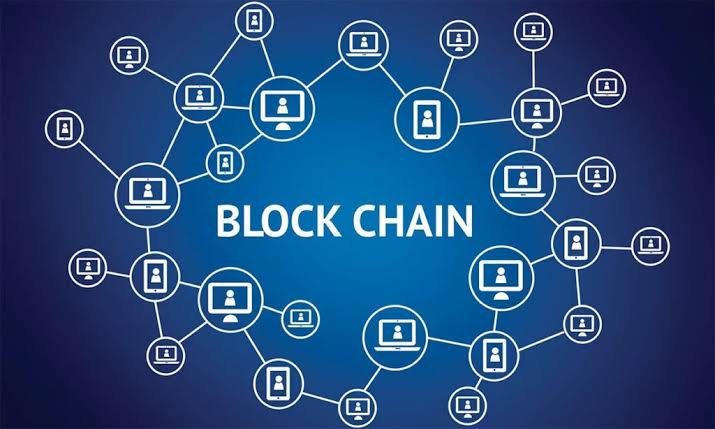
It doesn’t rely on one company tracking transactions; instead it allows thousands of computers across the globe to do that job collectively.
No one owns the network.
No one gets to turn it off.
That’s what makes Bitcoin different from the money in your bank account.
Every Transaction is Part of a Shared Ledger
Imagine you had to write down in a notebook every payment you ever made.
Now imagine millions of other people have the exact same notebook.
So when someone sends Bitcoin, all the notebooks update with the same data .
If one person suddenly changes a page then that is obvious because there is no other notebook that matches anymore.
That’s essentially how Bitcoin keeps its records.
All those records are stored on what’s called the blockchain, but you don’t need to know all the technical details to get the idea.
The important part is that everyone is looking at the same history.
It’s the shared history that keeps the network honest.
Mining Keeps Everything on the Move
What surprised me when I first learned about Bitcoin was the role of the miners.
I honestly thought miners spent the day creating new coins.
That’s only part of the story.
Much of their work is checking transactions to make sure no one is trying to cheat the system.
Picture miners as the referees in a football game.
They’re not playing the game themselves.
They’re making sure that everybody plays by the rules.
In return for doing that work , they get newly created Bitcoin , plus transaction fees .
Without miners, the network wouldn’t have anyone confirming transactions.
Bitcoin is meant to be limited.
Here’s something that makes Bitcoin different from traditional currencies.
There will never be more than 21 million Bitcoins.
That’s it.
No matter how popular Bitcoin gets no one can just create another ten million coins out of thin air.
That limited supply is built into the system itself.
Some call it gold.
Not because Bitcoin is shiny or physical, but because both are scarce.
Some say that scarcity makes Bitcoin more valuable, while others disagree. Regardless, it’s one of the reasons so many investors pay attention to it.
Price Swings Are Part of the Journey
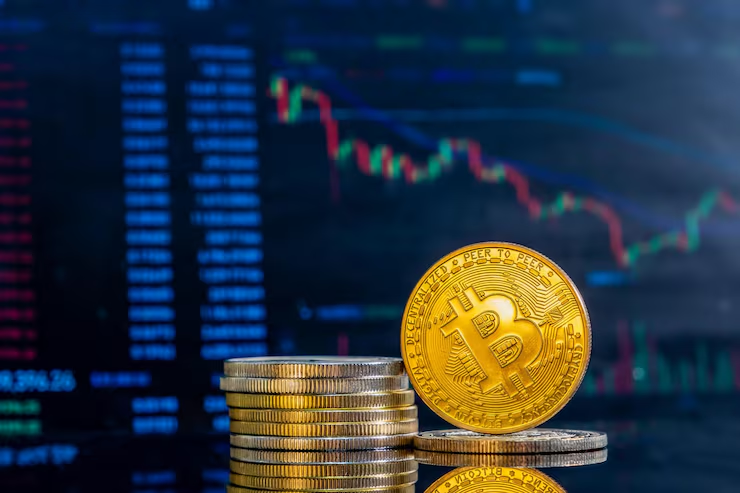
If you’ve ever looked at Bitcoin’s price chart, you’ll know one thing immediately.
It doesn’t sit still.
Sometimes it shoots right up.
Other days it falls just as fast.
Such movement can be scary, particularly if you’re new to investing.
But it’s also one of the reasons Bitcoin gets so much attention.
News events, regulations, market sentiment and even large investors buying or selling can all move the price dramatically.
That’s why smart investors prioritize understanding the technology first, not chasing quick profits.
Security Is a Responsibility
Bitcoin teaches you one thing very quickly, and that is that you are responsible for your own security.
If someone hacks your bank account, there’s usually a customer support team you can contact.
Bitcoin operates differently.
If you lose access to your wallet or forget your recovery phrase, there usually isn’t a helpline waiting to restore your account.
That sounds scary at first.
But that is part of the philosophy of Bitcoin, too.
You have the power.
The flip side is you have to protect that control too.
Bitcoin Is Still Maturing
“People often talk about Bitcoin as if it’s already finished.
But in fact it still is changing.
The developers are still working on improvements to the software.
Businesses keep finding new ways to use it.
Governments are still trying to work out how to regulate it.
More than a decade later, Bitcoin remains one of the most talked about technologies in finance.
Whether it becomes a global payment system, a digital store of value or something else entirely is an open conversation.
That’s part of what makes tracking bitcoin so fascinating.

How Bitcoin Changes the Way You Think About Money
I never thought about how money worked until I heard about Bitcoin.
“Why should I?
Banks did it all.
Fair payments… happened.
Bitcoin changes the way you think.
It asks questions you probably never thought of before.
Who’s got the cash?
Who looks at the transactions?
Do we always need a bank in the middle of it?
You don’t have to be a bitcoin fan to find those questions interesting.
Sometimes it’s useful to know an idea even if you never choose to use it.
Final Thoughts
Bitcoin is usually reduced to headlines about the soaring price or a dramatic crash.
But underneath all the noise is a surprisingly simple idea.
Make it possible for people to send money online without a central authority.
The rest, blockchain, mining, wallets, price fluctuations, are all in service of that goal.
You don’t have to agree that Bitcoin is the future of finance.
You don’t even have to own any of them.
If you spend a little time understanding how it works, you will have a much better perspective on why it has generated so much conversation over the past decade.
And who knows?
The next time someone asks, “What exactly is Bitcoin?”, you’ll probably find yourself explaining it without using a single complicated word.