
Traditional financial services rely on banks, brokers, exchanges, and other intermediaries to move money, provide loans, and process transactions. Decentralized finance, commonly known as DeFi, takes a different approach.
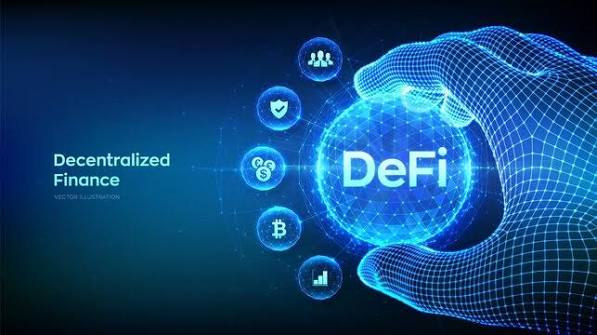
DeFi refers to blockchain-based financial applications that use smart contracts to provide services such as cryptocurrency trading, lending, borrowing, and asset management.
Instead of relying entirely on a central authority, many DeFi transactions are executed according to rules programmed into smart contracts. This can provide greater transparency and accessibility, but it also introduces risks that differ from traditional financial systems.
What Is DeFi?
Decentralized finance is a collection of financial applications built on blockchain networks. These applications aim to provide financial services without requiring a conventional financial intermediary to manage every transaction.
DeFi applications can include:
- Decentralized exchanges (DEXs)
- Lending and borrowing platforms
- Stablecoin applications
- Liquidity pools
- Asset management
- Derivatives
- Staking and yield applications
The level of decentralization can vary between protocols. Some systems rely heavily on automated smart contracts, while others may include centralized elements such as administrators, governance structures, or third-party data providers.
How Does DeFi Work?
Smart contracts are one of the main components of DeFi.
A smart contract is software deployed on a blockchain that automatically performs predefined actions when specific conditions are met. In DeFi, smart contracts can manage transactions, hold assets, facilitate exchanges, calculate interest, and manage collateral.
For example, a DeFi lending protocol may use smart contracts to accept collateral, issue a loan, and automatically manage certain repayment or liquidation conditions.
Automation can reduce manual processing, but it does not eliminate financial or technical risks.
Decentralized Exchanges (DEXs)
Decentralized exchanges allow users to trade digital assets through blockchain-based protocols rather than relying on a centralized exchange to hold and manage assets.
Many DEXs use liquidity pools instead of traditional order books.
Liquidity providers deposit digital assets into these pools, allowing other participants to trade against the available liquidity. In return, liquidity providers may receive a portion of trading fees according to the protocol’s rules.
However, providing liquidity involves risks such as:
- Impermanent loss
- Cryptocurrency price volatility
- Liquidity risks
- Smart-contract vulnerabilities
DeFi Lending and Borrowing
Lending and borrowing are major use cases of DeFi.
Lending protocols allow participants to deposit digital assets into pools that borrowers can access. Borrowers generally provide cryptocurrency as collateral before receiving another digital asset.
Unlike many traditional lending systems, DeFi lending protocols often rely on automated rules rather than conventional credit assessments.
If the value of collateral falls below a required level, the protocol may automatically liquidate some or all of the collateral according to its smart-contract rules.
What Are Stablecoins?
Stablecoins are digital assets designed to maintain a relatively stable value by referencing an underlying asset, such as a fiat currency.
They can be used in DeFi applications for:
- Trading
- Lending
- Borrowing
- Payments
- Liquidity provision
- Transferring value between blockchain applications
Stablecoins are generally intended to have lower price volatility than many other cryptocurrencies. However, their stability mechanisms, reserves, collateral structures, and issuer arrangements can vary and affect their risk profile.
Benefits of DeFi
Several characteristics of DeFi have attracted interest within the cryptocurrency industry.
Accessibility
Many DeFi applications can be accessed using a compatible cryptocurrency wallet and an internet connection without requiring a traditional bank or brokerage account.
Transparency
Blockchain transactions and smart-contract activity can often be viewed publicly, providing greater visibility into certain transactions and aspects of how a protocol operates.
Automation
Smart contracts can automatically execute predefined actions according to programmed conditions, reducing the need for manual intervention.
Programmability
DeFi applications can interact with other blockchain-based applications, allowing developers to combine existing financial services and infrastructure.
DeFi Risks Explained
DeFi does not eliminate financial risk. Important risks include:
- Smart-contract vulnerabilities
- Cryptocurrency market volatility
- Liquidity risk
- Automatic liquidation
- Oracle failures
- Governance risks
- Network congestion
- Cyberattacks
- Fraud and scams
- Regulatory uncertainty
Smart contracts execute according to their programmed logic. If the underlying code contains a vulnerability, the consequences can potentially be significant.
DeFi protocols may also depend on external data sources known as oracles. Inaccurate or manipulated data can affect pricing, collateral calculations, or liquidations.
Why Is Smart-Contract Security Important?
Smart-contract security is one of the most important considerations in DeFi.
A protocol may undergo an independent security audit before launch, but an audit does not guarantee that every vulnerability has been identified.
Additional risks may arise from:
- Software bugs
- Poorly written contracts
- Vulnerable dependencies
- Unsafe contract upgrades
- Risky wallet approvals
Blockchain transactions may be difficult or impossible to reverse, so security mistakes can potentially result in significant financial losses.
Traditional Finance vs. DeFi
Traditional financial services generally rely on regulated institutions, established legal frameworks, intermediaries, and consumer-protection mechanisms.
DeFi relies more heavily on blockchain networks, smart contracts, automated protocols, and digital assets.
This can provide advantages in accessibility and programmability, but certain DeFi applications may not provide the same traditional safeguards available through regulated financial institutions.
The regulatory treatment of DeFi also varies significantly between jurisdictions.
What to Check Before Using a DeFi Protocol
Research should be completed before depositing digital assets into a DeFi protocol.
Important factors include:
- Smart-contract security
- Protocol history
- Independent security audits
- Total liquidity
- Fee structure
- Withdrawal terms
- Governance structure
- Oracle dependencies
- Liquidation rules
- Regulatory considerations
Promises of unusually high returns should receive particular attention. A high advertised yield may reflect substantial risk rather than a guaranteed opportunity.
Protecting Digital Assets
Important security practices include:
- Using reputable cryptocurrency wallets
- Protecting private keys and recovery phrases
- Checking transaction details before approving them
- Avoiding unknown websites and suspicious links
- Reviewing token permissions
- Keeping software updated
- Researching unfamiliar protocols before connecting a wallet
Private keys and recovery phrases should never be shared or entered into an unfamiliar website.

The Future of DeFi
DeFi continues to develop as blockchain, smart-contract, and digital-asset technologies evolve.
Future developments may include greater interoperability between blockchain networks, improved security, better user interfaces, and new financial applications.
At the same time, regulation, cybersecurity, scalability, and consumer protection remain important challenges.
Conclusion
Decentralized finance represents an important development in blockchain-based financial services. Through smart contracts and decentralized protocols, DeFi can provide alternatives for cryptocurrency trading, lending, borrowing, liquidity provision, and other financial activities.
However, greater accessibility and programmability do not mean lower risk. Smart-contract vulnerabilities, cryptocurrency volatility, liquidity problems, governance issues, cybersecurity threats, and regulatory uncertainty can all affect DeFi activities.
Understanding how a protocol works, researching its risks, checking its security practices, and reviewing the applicable terms before committing digital assets are important steps when exploring decentralized finance.