For the better part of my life I never really thought about what happened to my money after I deposited it in a bank.
I would save some of my income and leave it there, assuming that was the right thing to do.
And it was, honestly.
But one night when I was going over my finances, I noticed something that annoyed me.
The money I’d saved so hard hadn’t grown much over the years.
It was safe. It was accessible. It wasn’t doing much.
That realization was a rabbit hole for me.
I started to read about investing, savings accounts, stocks, and eventually crypto currency. At some point I found a word that seemed to be everywhere.
DeFi
At first I scrolled past it.
The explanations were complicated-sounding. All the articles seemed to be full of new words and technical ideas. It seemed like something for programmers and blockchain gurus.
Still the curiosity brought me back.
One night I finally decided to stop avoiding it, and to actually learn what DeFi was.
It turns out the central idea wasn’t as complicated as I had imagined.
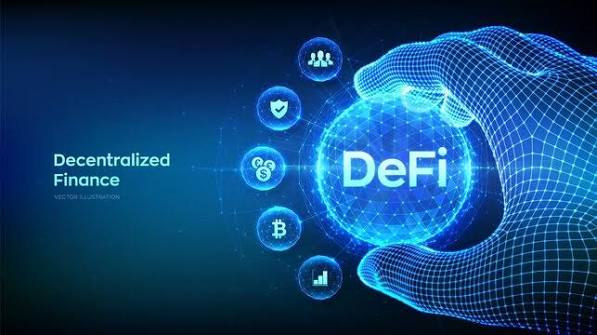
DeFi is short for decentralized finance and basically refers to a suite of financial services running on blockchain. These services are powered by smart contracts that allow you to lend, borrow, trade and earn rewards without having to rely on traditional intermediaries.
The idea immediately caught my attention.
It wasn’t because it promised huge returns.
Not because it was a radical idea.
But because it challenged something I’d always taken for granted.
The belief that financial services have to operate the way they do today.
The more I looked, the more interesting things were becoming.
And I met people around the world who were using decentralized applications to engage directly with financial tools from their digital wallets.
Some were shedding assets.
Others were adding liquidity.
Many were just playing with new technology that didn’t exist a decade ago.
Of course, I also learned that DeFi isn’t a magic solution.
It’s risky, like any new technology.
Markets are unpredictable.
Projects may fail.
Security is still an important consideration.
Hence the importance of education before engaging in anything.
But I couldn’t ignore the innovation going on, despite those challenges.
It was not really a platform or project per se that interested me.
It was the speed of experimentation.
Developers weren’t waiting years for a change.
In real time they were building, testing, improving and inventing whole new financial tools.
A few ideas worked.
Some did not.
But there was innovation every day.
I began to liken it to the infancy of the internet.
At that time, a lot of people didn’t understand why the Internet would become important.
It’s hard to imagine life without it nowadays.
I’m not saying DeFi is going to do exactly the same thing.
But who knows what tomorrow may bring?
But I do think it’s worth listening when technology starts to challenge assumptions we’ve had for a long time.
One such assumption is the way financial systems should operate.
If you are excited about decentralized finance or suspicious of it, it is worth having the conversation.
It makes us wonder.
Can we enhance access to financial services?
Can we make transactions more transparent?
Can technology open up new opportunities for people who have traditionally been excluded from parts of the financial system?
Those are good questions.
That’s part of the reason DeFi continues to attract the attention of developers, investors and curious learners everywhere.
I never thought that while checking my savings account I would be propelled into the world of decentralized finance.
But every so often curiosity begins with a very ordinary question.Is there another way?”
Concluding Thoughts
My DeFi journey didn’t start with cryptocurrency. It started with a curiosity to know more about how money works, and why financial systems are structured as they are.
The more I learned, the more I saw that decentralized finance isn’t just about technology. It’s about finding ways for people to access and use and interact with financial services.
Whether DeFi becomes a large part of the future or just one piece of a larger financial ecosystem it has already sparked important conversations worth paying attention to.