
I was not interested in decentralized finance a few years ago.
I hardly knew what DeFi meant, in fact.
I had heard the term mentioned in crypto conversations, watched some videos about it and read articles filled with technical jargon that seemed impossible to comprehend. All the explanations seemed to be written for developers, not regular people.
So I ignored it
Then something happened that changed my attitude.
One weekend I had to do an urgent transfer. Nothing out of the ordinary, just a simple transaction that I thought would take a few minutes.
Instead I had setbacks.
Customer support was not there.
The transaction was pending.
There was nothing I could do but wait.
It was a pain in the butt, but it wasn’t the end of the world.
As I waited I began to think about our dependence on financial systems that most of us never question. We trust them because they have always been around.
Then I remembered something I’d heard about DeFi.
It was often described as a way to get financial services without traditional intermediaries.
At first I thought that sounded like pie in the sky.
But curiosity won.
That night I began to investigate.
The more I read, the more I realized that decentralized finance was not trying to replace all banks overnight. It was attempting a different approach to financial services.
The concept was astonishingly simple.
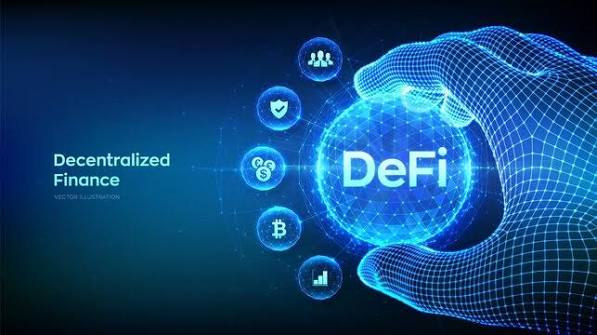
What if people could lend, borrow, save, trade and transfer assets through blockchain based applications rather than traditional institutions?
Suddenly, DeFi didn’t sound like an arcane crypto buzzword anymore.
It was like an experiment in letting people have more direct control over their finances.
The further I got, of course, the more complicated things became.
There were liquidity pools, decentralized exchanges, yield farming, smart contracts and dozens of new concepts to get your head around.
I’m not going to say I understood everything immediately.
I did not.
There were times, in fact, when I felt more confused than I had been when I began.
But there was one thing for sure.
There was a great idea behind all the technical language.
Much of the financial services that are currently intermediated could be automated by code.
I was intrigued by that idea.
“Imagine you had access to some financial tools without having to wait for business hours.
Think about using apps that operate across the world, not merely within a single country’s borders.
Imagine financial systems that are available as long as the network is available.
It’s easy to see why developers and innovators would get excited, whether or not that vision ever comes to fruition.
What surprised me the most was how quickly the DeFi ecosystem evolved.
There were always new projects cropping up.
Others proposed creative solutions.
Some took off.
Some were successful.
The others didn’t.
This reminded me of the early Internet.
Experimentation was rampant.
Not all the ideas really worked, but innovation was coming at a fantastic pace.
Of course, DeFi is not perfect.
There are dangers.
“Smart contracts have vulnerabilities.
Markets can go up and down.
The rules are always changing.
Anyone new to the space should take the time to learn before participating.
But those challenges don’t alter the fact that decentralized finance has brought about new ways of thinking about money and financial services.
Today, when I hear the word DeFi, I don’t think of complex diagrams or technical terminology.

I think of a simple question:
“What if technology could eliminate some of the barriers that people have erected for decades, and what would financial services look like?”
That’s a question to explore.
In Conclusion
I didn’t get into DeFi because I wanted to chase a trend. It all began with a mundane banking experience and a question about other types of finance.
The more I learned, the more I realized that decentralized finance isn’t just cryptocurrency. It’s about rethinking how financial systems can work in a digital world.
DeFi is already inspiring important conversations about accessibility, transparency and financial innovation, whether it becomes a major part of the future or merely influences traditional finance.
Sometimes one frustrating experience can change your perspective on an old system entirely.