
If you’d have said the word blockchain to me a few years ago, I probably would have nodded like I knew what it was.
I didn’t.
The word itself is a complicated one. It’s almost as if you need a degree in computer science to even be allowed to talk about it. Then you start reading articles online and in the first few paragraphs you get drowned in words like cryptography, distributed ledgers and consensus mechanism.
That’s when people usually throw up their hands.
Funny thing is blockchain isn’t anywhere near as scary as it’s often made out to be. The instant someone puts it in terms of the familiar, the whole thing seems suddenly . . . obvious.
So rather than give you another textbook definition, let’s look at it the way most of us learn things naturally.
Somebody has to keep track of each transaction.
Five friends decide to divide up all of their dinner bills.
Rather than rely on one person to keep the record, each person records the expenses in their own notebook.
If Sarah spends ₹2,000 on dinner tonight then all five notebooks get updated with same information.
Now imagine someone tries to cheat on you.
Maybe they scribble out the payment on their notebook and write something else down.
It is not working.
The other four notebooks still had the original record, so everyone could see at once that something had changed.
That’s the whole point of blockchain really.
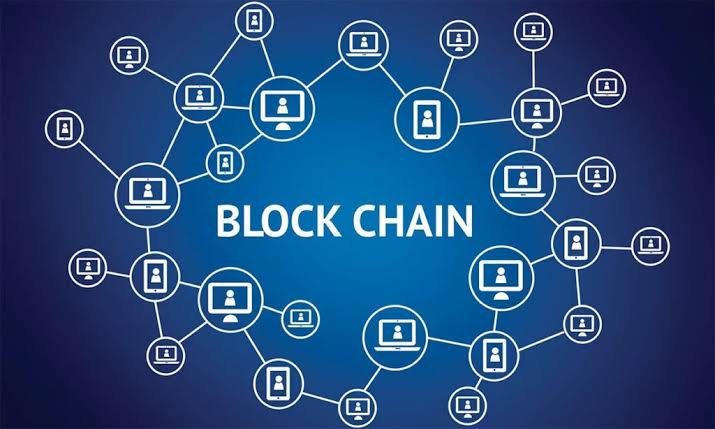
Rather than one company tracking the transactions, thousands of computers store identical records simultaneously.
Trust-based system
A fun fact I learned while learning about blockchain is that it doesn’t require you to trust one company.
Instead it takes thousands of computers to agree on something before anything is permanent.
That sounds slow, but it’s what makes the system so reliable.
If one computer goes down, it’s really not a big deal.
If one makes a mistake, the rest of the network ignores it.
To pull off a successful fake transaction, you would need to convince most of the network to accept false information simultaneously.
That’s a lot harder than cracking a single database.
Blocks are just groups of information
The word blockchain sounds much more technical than it really is.
A block is just a collection of validated transactions.
Once enough transactions are collected they are bundled together into a block.
Then that block is chained to the previous one.
Then a next block.
Then another. . . .
Soon you have a string of blocks.
That’s literally the origin of the name.
Sometimes tech names are easier than we think.
A Difficult Task: Changing Old Records
This is where blockchain becomes intelligent.
Once information is added to the chain it is not as easy to alter as it is to open a file and change a sentence.
Each block is connected to the previous.
If somebody tried to change an older transaction, it would have an effect on everything that came after it.
The rest of the network would instantly notice that their copies no longer matched.
And that’s why blockchain is often called tamper proof.
It’s not impossible to attack, but it’s incredibly hard to change history.
Blockchain Is More Than Just Cryptocurrency
This was more surprising to me than all others.
I thought blockchain and Bitcoin were pretty much the same thing for a long time.
They are not.
Bitcoin employs blockchain, but blockchain is merely a technology.
Here’s one example.
Email is sent via the internet.
The Internet is used by Netflix.
Online banking is banking on the internet.
They’re totally different services, but they all use the same technology under the hood.
The same is true for blockchain.
One of the many applications is crypto-currencies.
Blockchain is also being explored for supply chains, health records, digital identities, property ownership and even voting systems.
Some of those ideas will fly.
Some probably won’t do.
But it shows that blockchain has potential beyond digital currency.
Not All Blockchains Are Created Equal
Many beginners don’t realize that there’s more than one type of blockchain.
The Bitcoin blockchain was primarily created to manage secure financial transactions.
Ethereum took it a step further by allowing developers to build applications directly on its network.
Other blockchains are all about speed.
Some care more about lower fees to make a transaction.
Others are meant for businesses, not the general public.
It’s a bit like smart phones.
All phones can call, but they all have different features depending on who they’re made for.
Blockchain is not perfect
“When there’s a new technology, people tend to act like it’s the answer to everything.
Blockchain is no different.
The technology is impressive, but it’s not limitless.
Certain blockchain networks operate at a slower pace than traditional payment systems.
Others are energy intensive.
And then there are the regulatory issues, as governments around the world are still figuring out how blockchain-based systems fit into existing laws.
As with any technology, it has its pros and cons.
Knowing both gives you a much better picture than just buying into the hype.

Understanding Blockchain Improves Understanding Crypto
When I finally understood blockchain, cryptocurrency also made a lot more sense.
I stopped thinking of Bitcoin as mysterious Internet money, and started thinking of it as one application on top of a secure digital record-keeping system.
That tiny change completely changed my perspective on the crypto world.
Rather than saying why would you trust a digital currency? I began to ask, “What about the technology? How does it build trust?”
Those are two different questions.
Closing Thoughts
The fundamental idea behind the blockchain is surprisingly simple, although the technology itself is very technical.
Together instead of one organization to keep records it allows thousands of computers to keep the same record.
This makes it much harder to change information and sets up a system where trust is provided by the network, not a single company.
You don’t need to understand every line of code or every technical detail to understand why blockchain matters.
Sometimes it’s enough to understand the problem it was trying to solve.
And when you do, it’s a lot easier to keep up with all the buzz around Bitcoin, cryptocurrency, and digital finance.