From the outside, trading can seem exciting. Markets move throughout the day, react to news, and constantly present new charts and potential opportunities.
But successful trading is not simply about reacting to every price movement.
Trading involves making decisions under uncertainty. Prices can move in either direction, and even a well-researched trade can result in a loss. This makes preparation, risk management, and discipline just as important as identifying potential opportunities.
A sensible approach to trading starts with understanding how markets work and knowing how much risk can reasonably be accepted.
Understanding the Basics of Trading
Trading involves buying and selling financial assets with the goal of benefiting from price movements.
Depending on the market, traders may deal with stocks, currencies, commodities, cryptocurrencies, or other financial instruments.
The holding period can vary considerably. Some traders open and close positions within minutes or hours, while others may hold positions for several days or weeks.
The key point is that trading is not simply about predicting whether a price will rise or fall.
It involves making decisions based on available information while accepting that the outcome can never be guaranteed.
Choose a Market You Understand
There are many financial markets, but not every market is suitable for every trader.
Volatility, liquidity, trading hours, costs, and risks can vary significantly between markets.
Before trading an asset, take time to understand:
- What factors influence its price
- When the market is open
- How liquid the asset is
- What trading fees and other costs apply
- How quickly the market can change
- Why prices may move suddenly
Rather than constantly switching between markets, it can be more useful to focus on a market that is easier to understand and monitor.
Learn How to Read Price Information
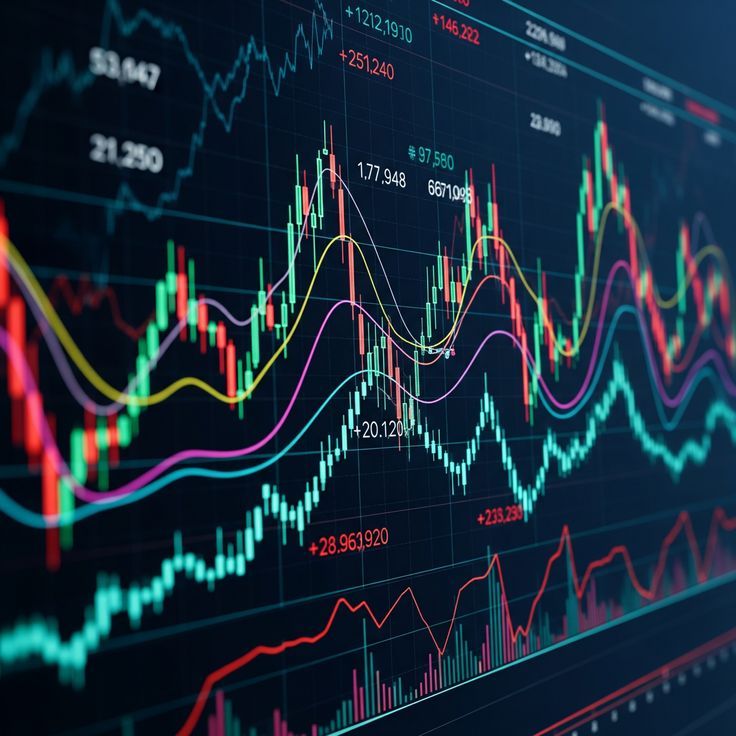
Charts are among the main tools used by traders.
A chart provides a visual representation of an asset’s price movement over a specific period. It can help traders identify trends, patterns, support and resistance levels, and changes in momentum.
Technical indicators may also be used to study price and volume.
However, indicators are not prediction tools.
Just because a particular pattern has appeared several times in the past does not mean the same outcome will occur every time. Charts should therefore be used as analytical tools rather than treated as a source of certainty.
Plan Trades in Advance
Trading without a plan can quickly become an emotional activity.
Before entering a trade, it can help to understand why the trade is being considered, where the potential entry point is, how much risk is acceptable, and what conditions would indicate that the original idea is no longer valid.
A basic trading plan may include:
- The market being traded
- Entry criteria
- Maximum acceptable risk
- Potential exit points
- Position size
- Conditions for closing a losing trade
- Profit-taking guidelines
- Maximum number of trades during a specific period
The exact strategy can differ from one trader to another. What matters is having a clear set of rules instead of making every decision in the heat of the moment.
Put Risk Management First
One of the biggest mistakes new traders can make is focusing too heavily on potential profits while paying too little attention to potential losses.
No trading strategy wins every time.
Risk management is designed to limit the potential damage when a trade does not go as expected.
This can involve controlling position sizes, establishing predetermined exit points, diversifying exposure where appropriate, and avoiding trades that carry more risk than the overall trading plan allows.
Protecting trading capital is important because a large loss can make it significantly harder to recover.
Never Risk Money You Cannot Afford to Lose
Trading involves financial risk and may not be suitable for everyone. The value of an investment can fall below its original value.
Money needed for essential expenses such as rent, food, bills, emergency costs, education, or other important financial commitments should not be placed at unnecessary risk.
It may also be useful to separate money intended for long-term financial goals from money allocated for speculative trading.
This separation can make it easier to follow a trading plan instead of making decisions because of financial pressure.
Understand Leverage Before Using It
Leverage allows a trader to control a larger position with a smaller amount of capital.
While leverage can increase potential returns, it can also increase potential losses.
A relatively small price movement against a leveraged position can have a significant impact on a trading account.
Before using leverage, make sure to understand:
- How the leverage works
- What fees and financing costs apply
- When positions could be automatically closed
- How much could potentially be lost
- What margin requirements apply
Higher leverage does not automatically create better trading opportunities. It can simply increase the size of both potential gains and losses.
Avoid Emotional Decisions
Trading can bring strong emotions.
A winning trade may create overconfidence, while a losing trade can lead to frustration and the desire to recover the money immediately.
This can result in behaviors such as increasing a position after a loss, entering trades without proper analysis, or holding a losing position simply because accepting the loss is difficult.
Predefined rules can help reduce these emotional reactions.
Sometimes the best trading decision is to stay out of the market.
Do Not Try to Catch Every Market Move
Financial markets can become particularly volatile following major economic announcements, company news, or unexpected events.
It can be tempting to enter a trade immediately after seeing a large price movement.
However, entering late simply because a market is moving can mean buying near a short-term high or selling after a significant decline has already occurred.
Missing an opportunity is generally less damaging than entering a trade that does not fit the trading plan.
There will always be another market opportunity.
Keep Trading Costs in Mind
Trading costs can have a significant effect on overall results, particularly for people who make frequent trades.
Depending on the market and trading platform, costs may include:
- Commissions
- Spreads
- Exchange fees
- Financing charges
- Other transaction-related costs
A strategy that appears profitable before costs are considered may produce very different results after all expenses are included.
Understanding trading costs in advance provides a more realistic picture of potential returns.
Keep a Trading Journal
A trading journal can be a valuable tool for improving trading discipline.
Keeping detailed records allows traders to review what happened rather than relying on memory.
A trading journal may include:
- Date and time of the trade
- Asset traded
- Entry price
- Exit price
- Position size
- Reason for entering the trade
- Reason for exiting
- Final result
- Mistakes or observations
Over time, this information can reveal useful patterns.
For example, a trader may discover that losses are more common when entering trades too late, taking positions that are too large, trading emotionally, or ignoring established rules.
Learn From Trading Losses
Losses are a normal part of trading.
The goal is not to avoid every losing trade because that is unrealistic. A more useful objective is to determine whether losses are occurring within an acceptable risk framework.
A single losing trade does not necessarily mean that a strategy is unsuccessful.
However, repeated losses caused by the same mistake should not simply be ignored.
Reviewing previous trades can help identify weaknesses and highlight areas where the trading process can be improved.
Be Careful With Online Trading Advice
There is no shortage of trading content available online.
Market opinions and trading ideas can come from social media accounts, forums, videos, newsletters, and influencers. Some information may be useful, while other content can be exaggerated or misleading.
Be particularly cautious about claims involving:
- Guaranteed profits
- Extremely high returns
- Little or no risk
- Secret trading strategies
- Guaranteed winning trades
Financial information should be checked carefully before acting on it. Consider the credibility of the source and whether claims can be independently verified.
The results achieved by one trader do not guarantee that another trader will achieve the same results.
Patience Is Part of Discipline
Trading does not require taking a position every day.
Some market conditions may offer opportunities that fit a particular strategy, while other conditions may not.
Waiting can be difficult when markets are constantly moving, but patience is an important part of disciplined trading.
A trader with a clearly defined process does not need to participate in every price movement.
Trading is not necessarily about the number of positions opened. The quality and consistency of the decision-making process matter more.
Continue Learning
Financial markets are constantly changing.
Economic conditions, regulations, technology, investor behavior, and market structures can all influence how markets operate.
Ongoing education can help traders understand these changes and identify weaknesses in their existing approach.
Useful areas to study include:
- Market fundamentals
- Technical analysis
- Risk management
- Trading psychology
- Position sizing
- Financial market structure
Learning also means understanding personal mistakes. Reviewing previous decisions can be just as valuable as studying new strategies.
Final Thoughts
Trading is not simply about finding an asset that might increase in price.
It is about managing uncertainty, controlling risk, following a process, and making decisions without allowing emotions to take control.
A disciplined trader understands that losses are possible and avoids risking money that cannot be afforded to lose. A disciplined trader also recognizes that not everything presented as financial advice online should be trusted.
No strategy can guarantee profits in financial markets.
A more realistic approach is to develop a trading plan, understand the risks, control position sizes, consider trading costs, review previous decisions, and continue learning.
There will always be another opportunity in the market. The real challenge is being prepared to recognize it without taking unnecessary risks along the way.