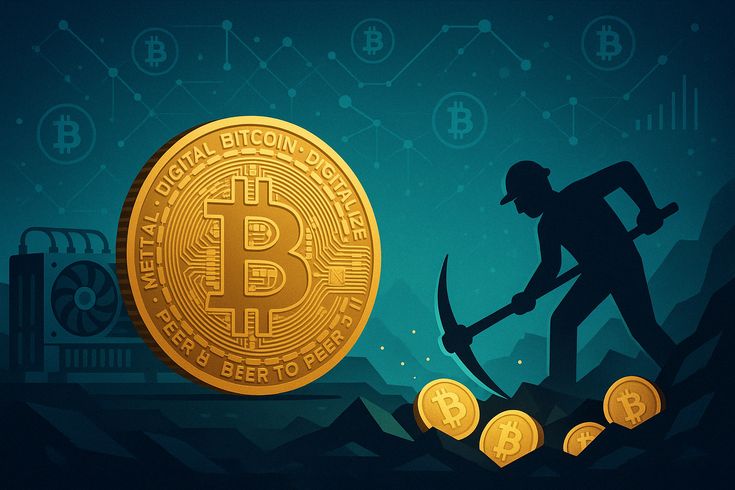
When I first got interested in crypto mining, I thought the hardest part would be understanding the technology.
I was wrong.
The technology eventually made sense. Wallets, blocks, hash rates, mining pools—those are things you can learn with time. What surprised me was all the other things that comes with mining, the patience, the uncertainty, the need to keep changing, and understanding that the market is rarely what you expect it to be.
If you’ve never been involved in mining, it’s easy to assume it’s all about turning on a machine and watching coins roll in.
That’s not how it works.
At least, that’s not how it has worked for most of my experience.
Lesson 1:
The market doesn’t care about your plans I did a ton of research on hardware before I made my first real investment.
I looked at specs, trawled forum threads, watched YouTube reviews and ran the numbers on potential profits. On paper, everything looked great.
Then the market moved.
Profit estimates changed almost overnight.
That was my first real introduction to crypto mining. No spreadsheet can predict everything. Prices change, network difficulty changes, and opportunities that look amazing today can look completely different a few months later.
Mining taught me very quickly that flexibility matters more than perfect predictions.
Most People Look at the Wrong Numbers
The first question I get from new people interested in mining is almost always:
“How much money can I make?”
It’s a fair question.
But experienced miners often ask different questions.
How much power does the machine consume?
What is the network stability? What are the operating costs?
How efficient is the setup?
Those details aren’t exciting, but they’re often what separates a profitable operation from a disappointing one.
I’ve seen people spend hours tracking coin prices while completely ignoring electricity costs. In the long run, that approach rarely ends well.
The Quiet Days Matter More Than The Exciting Ones
People love talking about bull markets.
Everyone remembers the months when prices surge and social media is filled with success stories.
What doesn’t get discussed enough are the quieter periods.
The months when nothing seems exciting.
The times when the mining rewards seem less worthwhile.
The times when people start to ask themselves if it’s worth to continue.
Ironically, those periods taught me the most.
Anyone can feel confident when prices are climbing. The real test comes when enthusiasm disappears and you’re forced to think long-term.
That’s where discipline matters.
Mining Is Really About Problem Solving
From the outside, mining looks like a hardware business.
From my perspective, it’s mostly a problem-solving business.
A machine overheats.
You troubleshoot.
Network conditions change.
You adapt.
Energy prices are rising.
You look for ways to improve efficiency.
Something is always changing.
The miners who survive for years aren’t necessarily the smartest people in the room. They are the ones that usually continue to learn and adapt when the circumstances change.
The industry has matured
You can’t miss how much crypto mining has matured.
Years ago, the industry felt smaller and more experimental.
Today, mining is far more professional.
Operations on a large scale control thousands of machines. Companies invest heavily in infrastructure. Energy efficiency has become a major focus. Even conversations around sustainability have become part of the industry.
The days of treating mining as a simple side hobby are largely behind us.
It’s a serious sector now.
What I Still Find Exciting About Mining
After all these years, what intrigues me the most is not the hardware.
It’s the concept behind it.
Every day miners all over the globe donate their computing power to secure decentralized networks. Millions of transactions are verified without a single authority being in control of the system.
That concept still feels remarkable.
Prices are easy to measure, so people tend to focus on that.
But what makes the ecosystem possible in the first place is the technology and infrastructure behind cryptocurrency.
And right at the centre of that is mining.
The Bottom Line
The one thing I’ve learned from crypto mining is that there are no shortcuts to success.
The people who last in this industry tend to be patient.
They pay attention to details.
They understand risk.
And they accept that markets, technology and opportunities are always changing.
Mining is not as straightforward as many new entrants think.
But that is also what makes it interesting.
Behind every verified transaction, every new block, and every cryptocurrency network operating today, there are miners quietly doing the work that most people never see.
After spending years around this industry, that’s the part I appreciate most.Why Experienced Miners Focus on Strategy, Not Hype